

Cosmetic enhancements have become a common part of modern aesthetic medicine, offering ways to refresh one’s appearance with minimal downtime. Among the most popular options are injectable treatments like neurotoxins and dermal fillers.
While often mentioned together, they work differently to achieve distinct results. Understanding the fundamentals of these procedures is the first step for anyone considering them. This guide provides an overview of what you should know before you begin your journey.
Understanding the Basics: Neurotoxins and Fillers
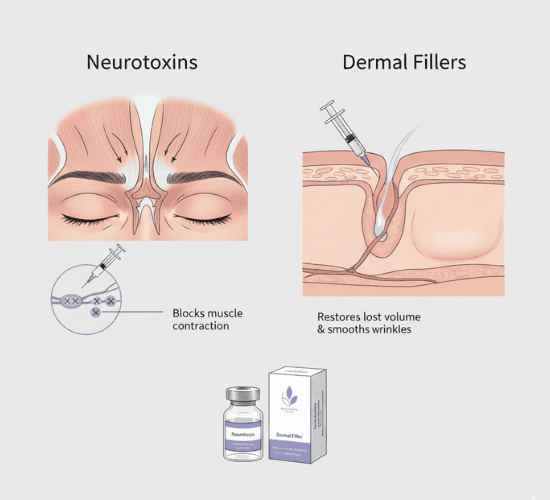
Making an informed decision about cosmetic treatments starts with knowing what they are and how they function. Although both are administered via injection, their mechanisms and applications are quite different.
What Are Neurotoxins?
Neurotoxins are injectable solutions that temporarily relax facial muscles. By blocking nerve signals to specific muscles, they prevent the contractions that cause dynamic wrinkles, which are lines formed by repeated facial expressions like smiling or frowning.
The result is a smoother skin surface in the treated area. These treatments are most effective for lines on the forehead, between the eyebrows, and around the eyes.
What Are Dermal Fillers?
Dermal fillers, on the other hand, are gel-like substances injected beneath the skin to restore lost volume, smooth lines, and enhance facial contours. Unlike neurotoxins, fillers do not affect muscle movement.
Instead, they work by “filling in” areas where age-related volume loss has occurred. They can address static wrinkles, which are visible even when the face is at rest. Common uses include adding volume to cheeks and lips, softening nasolabial folds, and improving the appearance of recessed scars.
Key Considerations Before Your First Appointment

Before scheduling a procedure, it is important to do your research and set realistic expectations. Cosmetic enhancements should be a personal choice made after careful thought.
Choosing a Qualified Provider
The most critical factor in achieving a safe and satisfactory outcome is the expertise of your provider. Look for a licensed and experienced medical professional, such as a board-certified dermatologist or plastic surgeon.
A qualified practitioner will have a deep understanding of facial anatomy and the technical skill to administer injections precisely. During a consultation, they should assess your unique facial structure, discuss your goals, and recommend a personalized treatment plan.
Understanding the Potential Risks
While generally safe when performed by an expert, all medical procedures carry some level of risk. Common side effects for both neurotoxins and fillers are typically mild and temporary, including bruising, swelling, redness, and tenderness at the injection site. More serious complications, though rare, can occur.
A thorough consultation should include a detailed discussion of all potential risks and side effects associated with your chosen treatment. Transparency from your provider is key.
Results and Maintenance
The effects of these treatments are not permanent. Neurotoxin results typically last between three to six months, after which muscle activity gradually returns. The longevity of dermal fillers varies more widely depending on the type of filler used, the area treated, and an individual’s metabolism, lasting anywhere from six months to over a year.
Maintaining the results requires follow-up treatments. Your provider can help you create a long-term plan that aligns with your aesthetic goals, similar to how one might plan for a larger procedure like breast augmentation in Salt Lake City by consulting with a specialist to understand the entire process from start to finish.
What to Expect During and After the Procedure
The procedures themselves are relatively quick, often completed in under an hour. A topical numbing cream may be applied to enhance comfort. After the injections, you can usually return to your daily activities immediately, although your provider will give you specific post-treatment instructions.
These may include avoiding strenuous exercise, excessive sun exposure, and certain medications for a short period to minimize bruising and swelling.
Injectable treatments like neurotoxins and dermal fillers offer effective, non-surgical options for facial rejuvenation. By understanding how they work, selecting a skilled provider, and having realistic expectations, you can make an empowered choice that aligns with your personal goals. Careful research and an open conversation with a medical professional are essential first steps on your path to a refreshed appearance.