
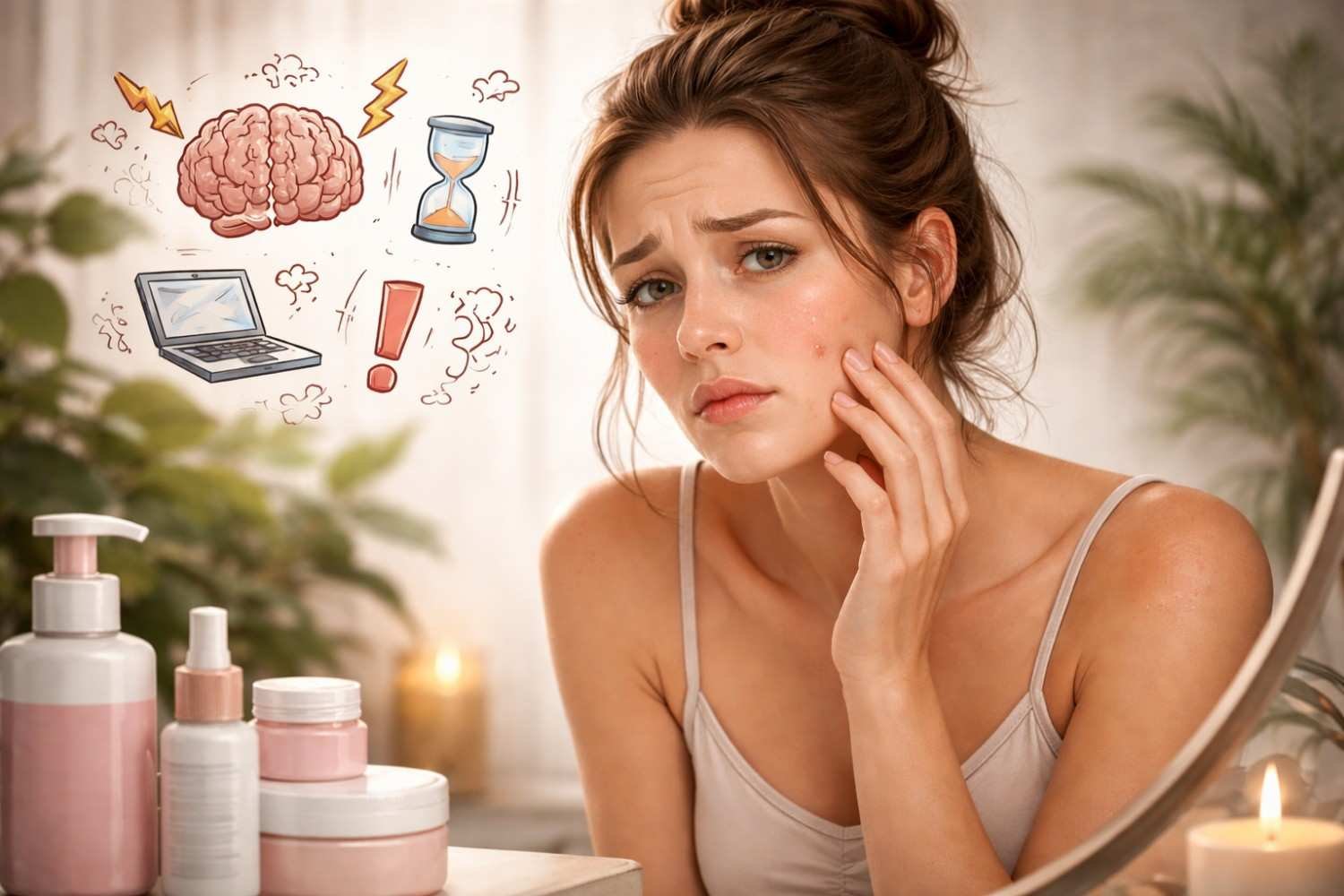
You have a major presentation tomorrow, a calendar full of deadlines, or a personal crisis that is keeping you up at night. Suddenly, you look in the mirror and see a painful cyst forming on your chin or a patch of dry, itchy skin flaring up on your arm. It isn’t a coincidence. It is your body physically manifesting your mental state.
The Biology: How Stress Hijacks Your Skin
To understand why a stressful week leads to a bad skin day, we have to look at hormones. When your brain perceives a threat—whether it’s a tiger in the wild or an overflowing inbox—it triggers the body’s “fight or flight” response. This releases a surge of stress hormones, primarily cortisol and adrenaline.
The Cortisol Effect
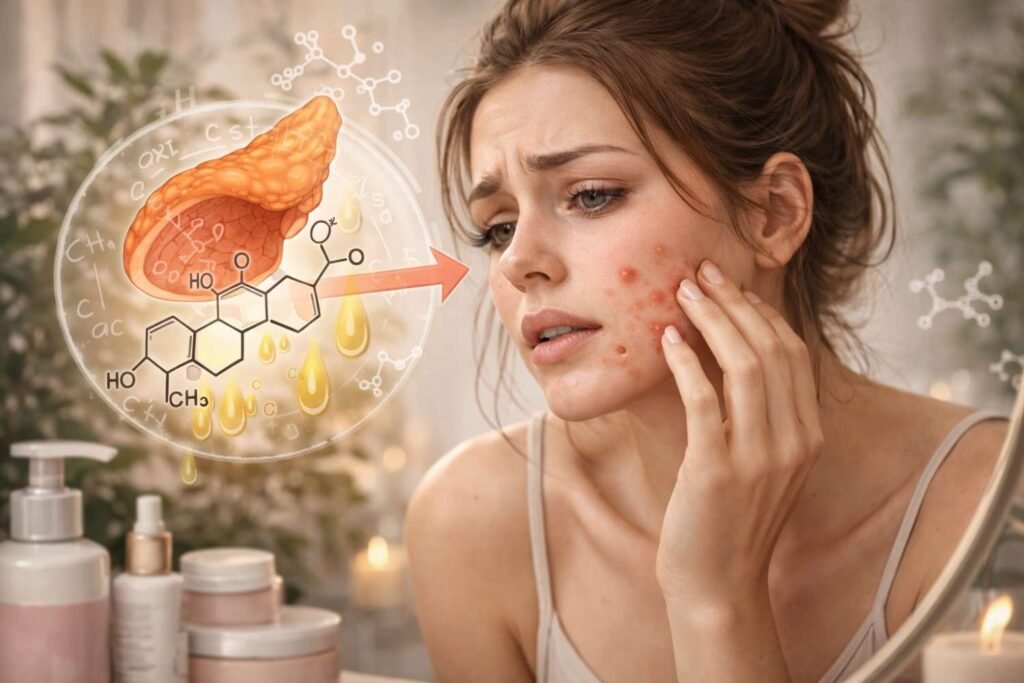
Cortisol is often called the “stress hormone,” and it is public enemy number one for clear skin. When cortisol levels spike, it signals your sebaceous glands to produce more oil. This isn’t the healthy, hydrating oil your skin needs; it is often a thick, waxy sebum that easily clogs pores.
Simultaneously, cortisol causes inflammation throughout the body. If you are already prone to inflammatory conditions like acne, eczema, or psoriasis, this internal inflammation acts like fuel on a fire, turning a minor, manageable issue into a full-blown flare-up.
Disruption of the Skin Barrier
Your skin has a protective outer layer known as the stratum corneum, or skin barrier. Its job is to keep hydration in and irritants out. Chronic stress impairs the barrier function, leading to increased transepidermal water loss.
When this barrier is compromised, your skin loses its ability to retain moisture. It becomes dry, dull, and far more susceptible to external bacteria and allergens. This is why you might notice your skin feels tight or sensitive during difficult periods, even if you haven’t changed your products.
Immune System Confusion
Stress puts your immune system into overdrive. A hyper-reactive immune system creates a systemic inflammatory response. For the skin, this means the body is on high alert, ready to attack. This dysregulation can trigger autoimmune-related skin responses, causing rashes, redness, and severe irritation seemingly out of nowhere.
Common Signs Your Skin Is Stressed
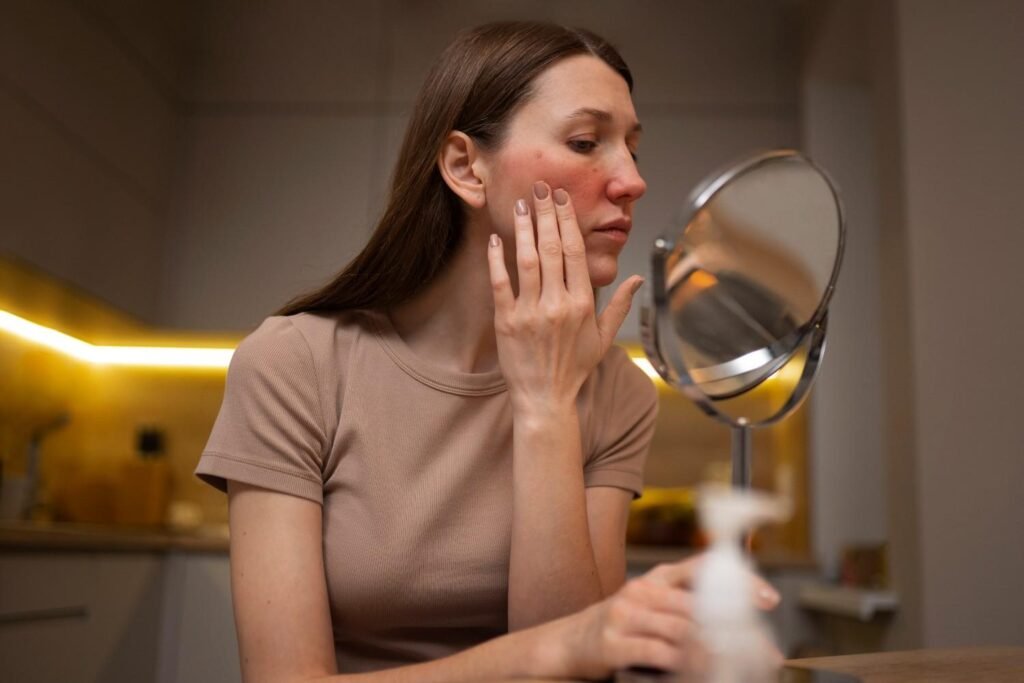
Stress manifests differently for everyone. However, there are specific patterns dermatologists often see that distinguish stress-related issues from standard skin concerns.
The Acne Feedback Loop
Stress acne usually appears differently from the pimples you might get from trying a new product. It typically manifests as deep, painful cysts along the jawline and chin. Because stress increases oil production and inflammation simultaneously, these breakouts can be stubborn and slow to heal.
To make matters worse, the appearance of acne often causes more stress, creating a frustrating cycle. You stress, you break out, you stress about the breakout, and the cycle continues.
Eczema and Psoriasis Flare-Ups
For those with chronic conditions, emotional distress is a massive trigger.
- Eczema: Stress suppresses the immune system’s ability to fight off bacteria while simultaneously causing inflammation. This leads to the “itch-scratch cycle.” You feel stressed, the skin itches, you scratch, and the barrier breaks down further.
- Psoriasis: This autoimmune condition causes the rapid buildup of skin cells. High stress levels act as a switch, turning on the immune response that accelerates this cell growth, leading to thick, scaly patches.
Hives and Rashes
Have you ever been so nervous that you broke out in hives? This is a chemical reaction. Stress causes the body to release histamine, the same chemical involved in allergic reactions. This can result in raised, red, itchy welts known as stress hives (urticaria). They can appear anywhere on the body and typically subside once the acute stressor passes.
Premature Aging and “Stress Face”
Chronic tension doesn’t just cause spots; it changes the structure of your skin. High amounts of cortisol can break down collagen and elastin, the proteins responsible for keeping skin plump and youthful. Furthermore, psychological distress induces oxidative stress at a cellular level, which accelerates the aging process.
Combined with the physical expressions of stress—furrowing your brows, clenching your jaw, and squinting at screens—this leads to the formation of permanent fine lines and wrinkles.
Expert Strategies for Calming Your Skin (and Mind)
Treating stress skin requires a two-pronged approach: internal management and external support. You cannot serum your way out of chronic burnout, but you can support your skin while you work on your mental health.
1. Simplify Your Skincare Routine
When your skin is acting up due to stress, the instinct is often to attack it with strong actives—retinoids, high-percentage acids, or abrasive scrubs. This is usually a mistake. Stressed skin has a compromised barrier; harsh ingredients will only cause further irritation.
Instead, strip your routine back to the basics:
- Cleanse: Use a gentle, non-foaming cleanser that doesn’t strip natural oils.
- Hydrate: Look for ingredients that repair the barrier, such as ceramides, hyaluronic acid, and niacinamide.
- Treat: If you are managing a specific condition, be consistent but gentle. For example, ensuring your eczema treatment, such as those offered in Salt Lake City, includes a rich emollient cream can prevent the barrier from cracking during high-stress windows.
- Protect: Never skip sunscreen, as inflammation makes skin more sensitive to UV damage.
2. Practice “Skin Mindfulness”
Incorporating stress-reduction techniques can yield visible results in your complexion. You don’t need to spend an hour meditating; small moments count.
- Box Breathing: Inhale for four counts, hold for four, exhale for four, hold for four. This signals your parasympathetic nervous system to calm down, lowering cortisol levels.
- Face Massage: Tension often accumulates in the jaw and forehead. Spending two minutes massaging your face while applying moisturizer can improve circulation and relax the muscles that cause dynamic wrinkles.
3. Support from the Inside Out
Your lifestyle choices act as the foundation for your skin’s health.
- Sleep Hygiene: Skin creates new collagen and repairs DNA damage while you sleep. Chronic sleep deprivation prevents this recovery process. Aim for 7–9 hours of quality rest.
- Anti-Inflammatory Diet: High-sugar and high-processed foods can spike insulin, which triggers more oil production. Focus on foods rich in omega-3 fatty acids (like salmon and walnuts) and antioxidants (berries and leafy greens) to fight internal inflammation.
- Movement: Exercise increases blood flow, which helps nourish skin cells and keep them vital. It also helps flush cellular debris out of the system. Just be sure to wash your face immediately after sweating to prevent clogged pores.
Conclusion
Your skin is a communicator. When it flares up, acts out, or looks tired, it is often a signal that your internal systems are overloaded. Instead of feeling frustrated by these imperfections, try to view them as a warning light on a dashboard. It is a sign that you need to slow down, prioritize rest, and treat yourself with kindness.