
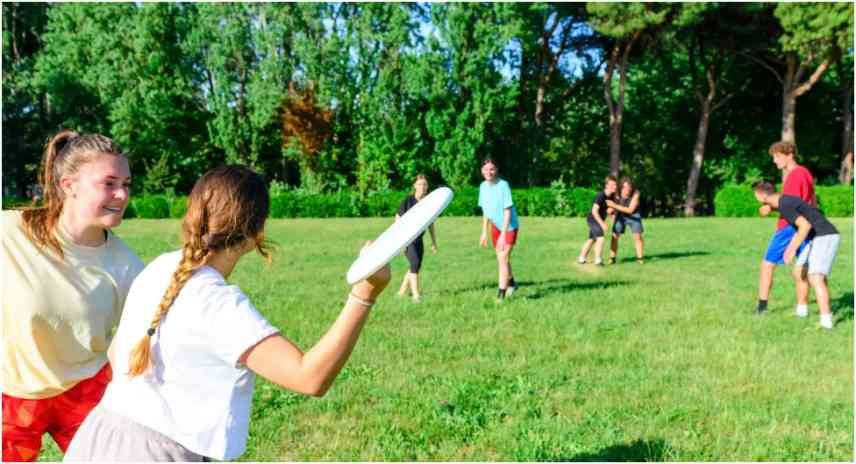
Walk into any public park, beach, or neighborhood cul-de-sac on a warm weekend afternoon, and you will see people competing intensely over miniature trampolines, tossing bean bags at wooden boards, or swinging paddles on downsized courts. Games like pickleball, spikeball, and padel have completely taken over the modern landscape of physical activity.
But these global phenomena didn’t start in elite corporate boardroom meetings or high-tech sports laboratories. They weren’t engineered by massive athletic brands looking to launch a new product line. Instead, today’s biggest recreational activities were born out of pure accident, spatial limitations, and parents desperately trying to entertain bored children on summer vacations.
Understanding the history of these activities reveals that the best games aren’t designed for television broadcasts—they are designed for simple, immediate fun.
The Kitchen Table Improvisation of Pickleball
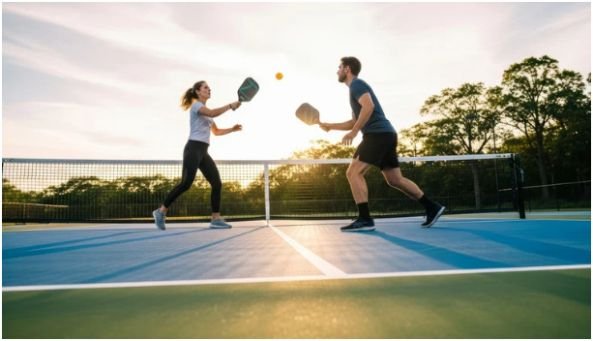
In the summer of 1965, on Bainbridge Island, Washington, three fathers—Joel Pritchard, William Bell, and Barney McCallum—returned home from a round of golf to find their families completely bored with nothing to do. The property had an old asphalt badminton court, but the group couldn’t find enough functional rackets or a proper shuttlecock to play a standard match.
Rather than giving up and heading indoors, they decided to improvise. They lowered the badminton net, gathered some scrap pieces of wood from a nearby shed to fashion crude paddles, and grabbed a perforated plastic wiffle ball from the garage. Over the course of that weekend, they developed a unique set of regulations designed to keep the game accessible for players of all ages.
The sport grew quickly because it stripped away the heavy athletic demands of traditional tennis. Understanding the basic pickleball rules shows how the creators deliberately engineered the game to prioritize strategy over raw power. By creating the “kitchen”—a non-volley zone near the net—they prevented taller, stronger players from simply smashing the ball down at their opponents, establishing a highly social, balanced game that continues to dominate current global social recreation trends.
Spikeball: Resurrecting a Discontinued 80s Toy
If you visit a beach or college campus today, you will almost certainly see groups of four diving into the sand around a small, circular yellow net. This game is officially known as roundnet, though it is universally called Spikeball. While it feels like a thoroughly modern invention, the game actually dates back to the late 1980s.
A toy designer named Jeff Knurek originally invented the game in 1989, selling it in toy stores under the name Spikeball. However, the initial launch failed to gain mainstream traction. The equipment was fragile, marketing was limited, and the concept quickly faded into obscurity, leading the product to be discontinued.
The game’s modern empire began in 2008 when an outdoor enthusiast named Chris Ruder tracked down the expired trademark. Ruder gathered a group of friends, upgraded the durability of the casual sports gear, and began selling the sets directly to ultimate frisbee players, surfers, and physical education teachers.
By leveraging viral social media clips of intense rallies, they transformed a forgotten 1980s toy failure into a legitimate international sport with its own national championships.
Padel: A Mexican Businessman’s Space-Saving Solution
While pickleball dominates North America, padel has become an absolute juggernaut across Europe and South America. The sport looks like a high-speed hybrid of tennis and squash, played inside a fully enclosed court made of glass and mesh walls.
The entire sport exists because a wealthy Mexican businessman named Enrique Corcuera wanted a private tennis court at his vacation home in Acapulco in 1969. The problem? The footprint of his backyard was too small to fit a standard 78-foot-long tennis court, and the plot was surrounded by solid concrete walls that regularly trapped balls or allowed them to fly into his neighbor’s yard.
Corcuera decided to adapt. He constructed a compact court measuring just 10 by 20 meters and embraced the architectural barriers rather than fighting them. He declared that the surrounding walls were an active part of the playing field, allowing the ball to be hit off the concrete just like in squash.
He swapped out stringed tennis rackets for smaller, solid wooden paddles that offered better control in the tight space. The resulting game was faster, relied on continuous movement, and quickly spread to Spain and Argentina, laying the groundwork for the professional international tours we see today.
Cornhole: The Evolution of a Folk Tradition
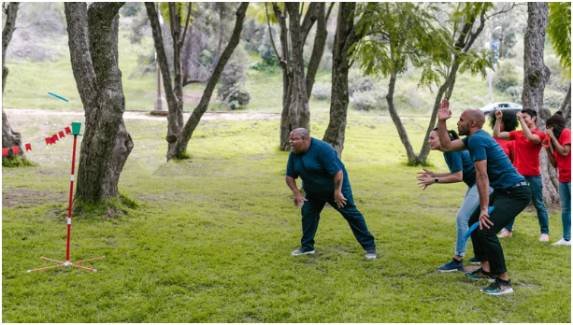
Not every recreational game can be traced back to a specific inventor. Cornhole—the simple game of tossing fabric bags into a raised wooden platform with a hole in the end—developed through decades of regional American folklore.
Historical records indicate that variations of the game were played in the mid-19th century throughout Germany and the American Midwest. The modern version of the game truly found its footing in the hills of Kentucky and the tailgating lots of Cincinnati, Ohio. Originally, farmers filled burlap bags with dried corn kernels—hence the name “cornhole”—and tossed them at wooden boards during autumn harvest festivals.
The game became a staple of American culture because it is completely democratic. You can hold a cold drink in one hand and toss a bag with the other. By standardizing the board dimensions and switching from real corn kernels to weather-resistant plastic pellets, communities stabilized the game, allowing it to transition from casual backyard barbecues to ESPN-broadcasted professional tournaments.
Why Accidental Games Have the Ultimate Staying Power
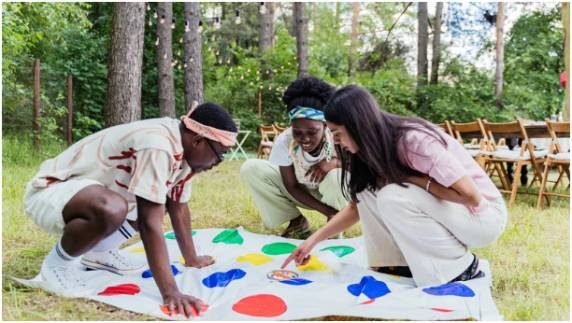
What makes a recreational game successful? A recreational game achieves long-term mainstream success when it features a low financial barrier to entry, requires minimal space to set up, and offers a flat learning curve that allows beginners to participate immediately while maintaining a high skill ceiling for competitive players.
When you look at the history of backyard games, the ones that survive are those that eliminate intimidation. If a game requires two hours of reading a rulebook or buying hundreds of dollars of protective equipment just to try it once, casual players will look elsewhere. Accidental inventions succeed because they are built out of what is already available, focusing entirely on maximum engagement and immediate fun with a sustainable wellness routine.
Myth vs. Fact: Uncovering Recreational History
- Myth: Pickleball was officially named after the Pritchard family dog, Pickles.
- Fact: While the dog story is popular, the creator’s wife, Joan Pritchard, confirmed she named it after the “pickle boat” in rowing crew racing, which features a mismatched crew compiled from the leftover oarsmen of other boats—reflecting how the game was thrown together from the remnants of other sports.
- Myth: You need expensive, high-tech training to compete in alternative sports.
- Fact: The vast majority of top-tier roundnet and cornhole players started as casual hobbyists in public parks, proving that basic spatial awareness and consistent practice matter far more than corporate training facilities.
Frequently Asked Questions
1. Why are traditional sports like tennis losing ground to games like padel and pickleball?
Traditional tennis has a steep learning curve; it can take months of lessons just to sustain a basic rally with a partner. Games like paddle and pickleball use smaller courts and solid paddles, allowing players to successfully rally and have fun during their very first hour on the court.
2. How do these games impact modern community design?
Because these games are space-efficient, cities are actively converting underutilized spaces—like abandoned retail stores or tennis courts—into multi-court recreation hubs that can host four times as many active community members in the same physical footprint.
Conclusion
The greatest recreational games on the planet share a common DNA: they were built for the joy of the game rather than the profit of a franchise. Whether born from a rainy afternoon on Bainbridge Island, a tight backyard in Acapulco, or a Midwestern tailgating lot, these activities prove that human beings don’t need elaborate infrastructure to connect. We just need a simple set of rules, an outdoor space, and the willingness to turn a boring afternoon into an experiment in play.