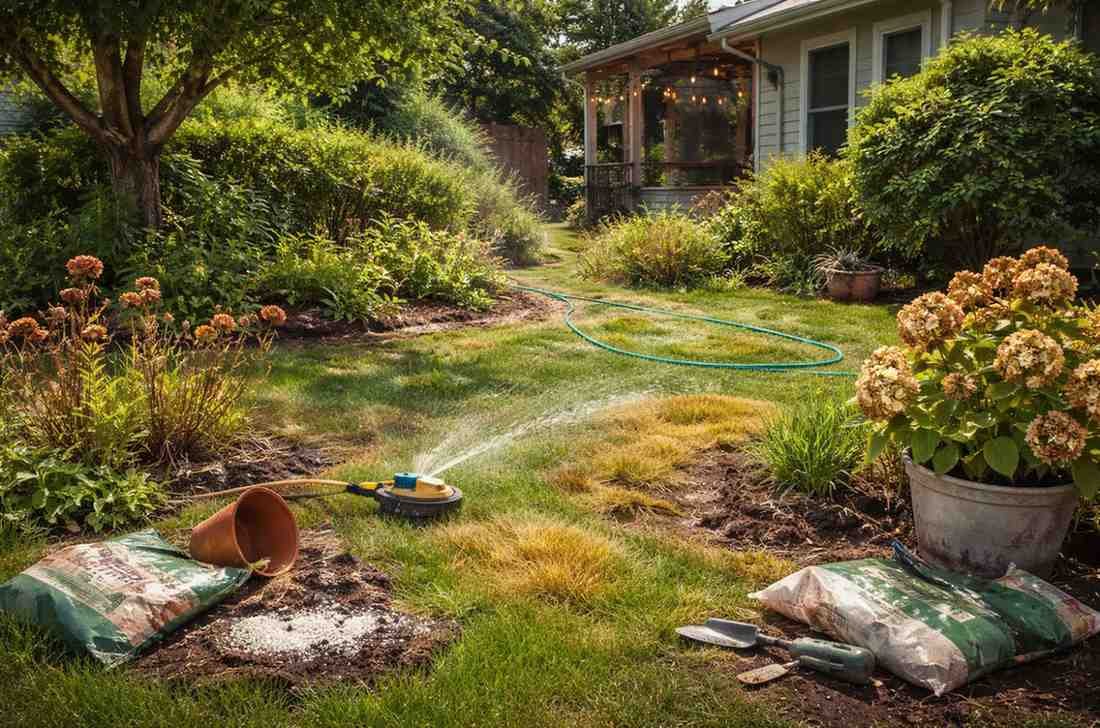
We all love the idea of a lush, vibrant yard. It adds curb appeal, creates a relaxing sanctuary, and can even boost property value. But for many homeowners, that dream garden often turns into a money pit. You buy beautiful flowers, only to watch them wither in a week. You water religiously, yet your lawn turns yellow. You spend weekends weeding, but the jungle always returns.
Mistake 1: Improper Plant Selection
One of the most exciting parts of landscaping is heading to the nursery. Rows of colorful blooms and exotic greenery are incredibly tempting. However, buying plants based solely on aesthetics is the quickest way to waste your budget. Just because a plant looks healthy in the garden center doesn’t mean it will survive in your yard.
The Problem with Impulse Buying

Every plant has specific needs regarding sunlight, soil type, and climate. A fern that thrives in the cool, damp shade of a nursery will likely scorch and die if planted in a sunny, south-facing flowerbed. Similarly, placing a sun-loving hibiscus in a dark corner will result in a leggy plant that refuses to bloom.
Another common issue involves size. Homeowners often underestimate how large a tree or shrub will grow. That cute, one-foot sapling might look perfect next to your foundation today, but in five years, its roots could be cracking your foundation, or its branches could be rubbing against your siding.
The Financial Consequences
The immediate cost is the price of the plant itself. If you spend hundreds of dollars on greenery that isn’t suited for your environment, you are essentially throwing that money away when the plants inevitably die.
However, the long-term costs are steeper. Overgrown plants often require expensive removal. If a tree grows too large for its space, it can damage utility lines or structural elements of your home, leading to hefty repair bills. Furthermore, invasive species can take over your yard, requiring seasons of intensive labor and chemical treatments to eradicate.
Solution: Research and Native Plants
Adopting the “Right Plant, Right Place” philosophy is the best way to protect your investment. Before you buy, analyze your yard. Map out which areas get full sun, partial shade, or deep shade. Know your USDA Hardiness Zone to ensure the plants can survive your local winter.
Consulting with experts can clarify these choices. Local master gardeners or nursery staff can steer you toward native plants. Native species are naturally adapted to your region’s rainfall and soil conditions. They typically require less water, fertilizer, and pest control than non-native exotics, saving you money on maintenance supplies for years to come.
Mistake 2: Neglecting Soil Health
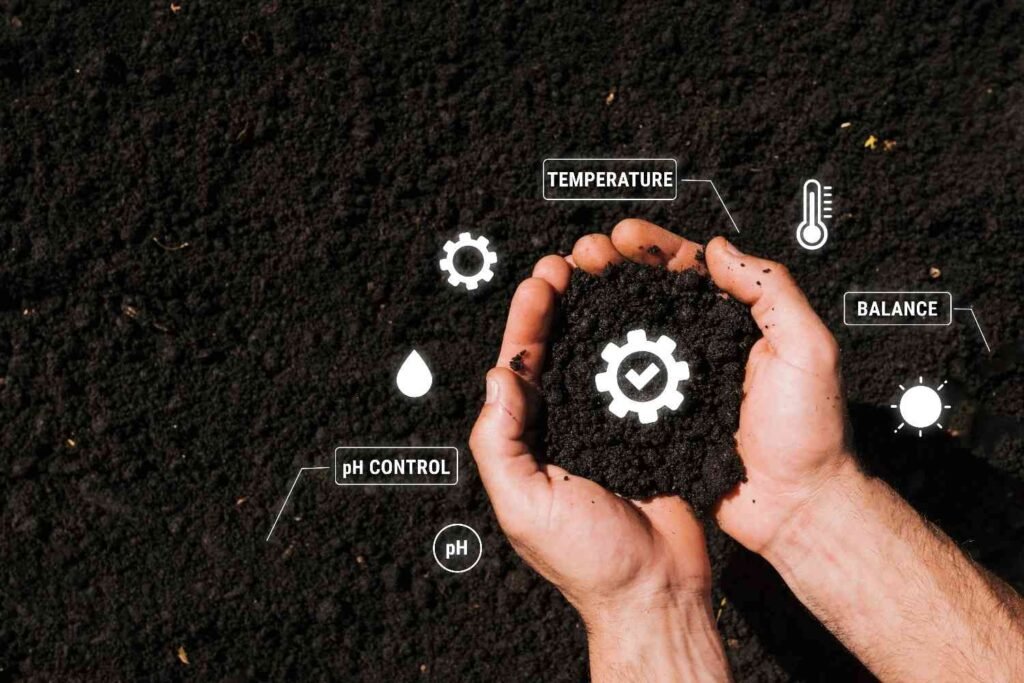
It is easy to focus on what grows above the ground, but the success of your landscape depends entirely on what is happening below it. Soil is the engine of your garden. If the engine is broken, the car won’t run, no matter how much you polish the paint. Many homeowners skip soil preparation entirely, digging a hole and dropping a plant in without a second thought.
Why Soil Chemistry Matters
Soil isn’t just dirt; it is a complex mix of minerals, organic matter, water, and air. If your soil is too compacted (like heavy clay), roots cannot penetrate it to find water. If it is too sandy, water drains away before the roots can drink. Furthermore, pH balance is critical. If your soil is too acidic or too alkaline, nutrients become chemically locked, making them unavailable to your plants. You could dump bags of expensive fertilizer on the ground, but if the pH is wrong, the plants cannot absorb it.
The Financial Consequences
Ignoring soil health leads to a cycle of failure. Plants will struggle to establish, showing signs of nutrient deficiency like yellowing leaves or stunted growth. You might react by buying more fertilizer or watering more frequently, which wastes money and resources without solving the root cause. Eventually, the plants die, and you have to pay to replace them, only to restart the cycle of failure.
Solution: Test and Amend
Before you plant anything, conduct a soil test. You can buy simple kits at home improvement stores or send samples to your local university extension service for a detailed analysis.
These tests will tell you exactly what your soil needs.
- For compacted clay: You may need to till in organic matter like compost or peat moss to improve drainage and aeration.
- For sandy soil: Adding organic material helps retain moisture.
- For pH imbalance: You might need to add lime (to raise pH) or sulfur (to lower pH).
Spending a small amount on soil amendments now ensures your plants have the foundation they need to thrive on their own, reducing the need for constant chemical intervention later.
Mistake 3: Overwatering or Underwatering
Water is life, but in the garden, it can also be a destroyer. Finding the balance is one of the hardest challenges for homeowners. Many people fall into the trap of shallow, frequent watering, which encourages roots to stay near the surface. Others drown their plants, thinking more water is always better.
The Dangers of Improper Irrigation
When you water lightly every day, plant roots have no incentive to grow deep into the soil to find moisture. This results in a weak root system that cannot handle stress. The first time you miss a watering or a heatwave strikes, these shallow-rooted plants wither immediately.
Conversely, overwatering pushes oxygen out of the soil. Roots need to breathe. If the soil is constantly waterlogged, the roots suffocate and rot. Signs of root rot often look like signs of drought (wilting leaves), leading homeowners to add more water, which accelerates the plant’s death.
The Financial Consequences
The most obvious cost here is your water bill. Inefficient watering practices, like watering during the heat of the day when evaporation is high, can spike utility costs significantly.
Beyond the monthly bill, replacing turf and plants lost to drought stress or root rot is expensive. Sodding a lawn or replanting a flower bed can cost thousands of dollars. Additionally, constant moisture on foliage encourages fungal diseases, leading to further spending on fungicides.
Solution: Smart Irrigation and Schedules
The goal is deep, infrequent watering. This encourages roots to dive deep into the soil, creating a drought-tolerant landscape.
Investing in a smart irrigation system can be a game-changer for your budget. Modern controllers use local weather data to adjust watering schedules automatically. They won’t turn the sprinklers on if it’s raining or if the soil is already moist. If an automated system isn’t in the budget, simple soaker hoses are an efficient alternative. They deliver water directly to the base of the plant, minimizing evaporation and keeping foliage dry to prevent disease.
Mistake 4: Ignoring Long-Term Maintenance
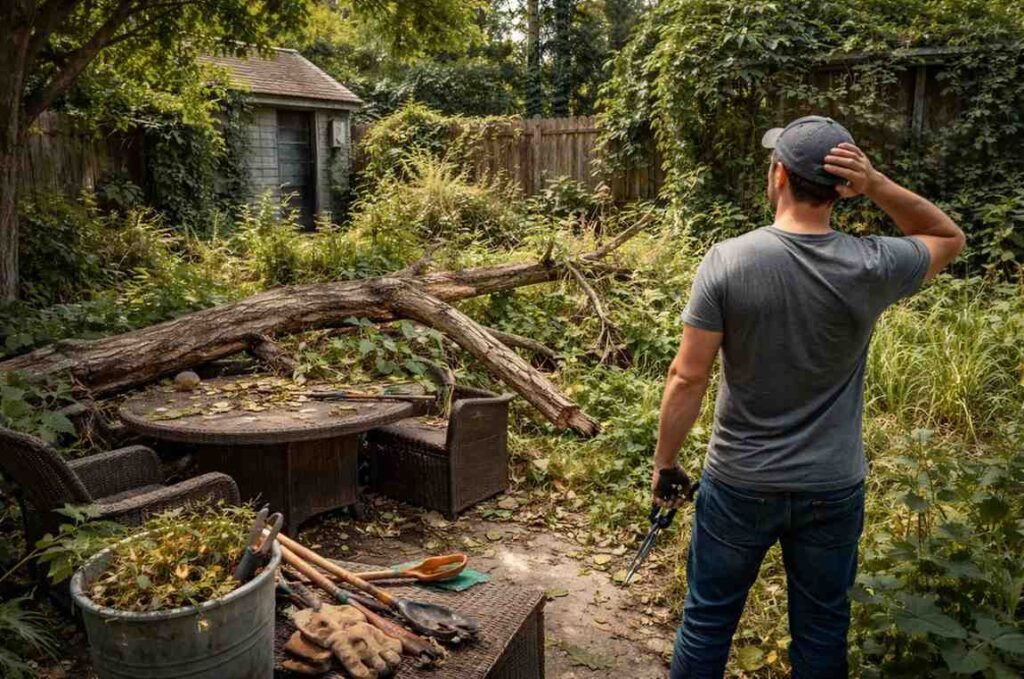
A landscape is not a static painting; it is a living, evolving entity. Many homeowners install a beautiful yard and assume the work is done. They fail to plan for the growth and maturation of their green space. Neglect is a slow process, but the financial repercussions hit hard when problems accumulate.
The Snowball effect of neglect
Weeds are opportunistic. If you don’t have a plan to control them, they will compete with your desirable plants for water and nutrients. Overgrown shrubs can block windows, trap moisture against your home’s siding (inviting mold and rot), and create hiding spots for pests.
Trees pose the most significant risk. A sapling requires structural pruning to ensure it develops a strong framework. Without this early care, trees can develop co-dominant stems or weak branch unions that are prone to splitting during storms.
The Financial Consequences
Deferred maintenance is always more expensive than routine care. Removing a massive, overgrown thicket of invasive vines costs far more than pulling a few weeds once a week.
The risks associated with trees are substantial. A large, unmaintained tree that drops a heavy limb on your roof or car can cause thousands of dollars in damage and increase your insurance premiums. Furthermore, trying to rehabilitate a severely neglected landscape often fails, necessitating a “rip-out and replace” approach that costs as much as a brand-new installation.
Solution: A Proactive Plan
Create a seasonal maintenance calendar. Know when to prune your hydrangeas, when to fertilize your lawn, and when to mulch. Regular attention keeps small problems from becoming expensive disasters.
For tasks that are dangerous or require specialized knowledge, do not hesitate to hire professionals. This is particularly true for large trees. Hiring tree services in Logan for an annual inspection and pruning can prevent storm damage and prolong the life of your trees, which are valuable assets to your property. While hiring help costs money, it is far cheaper than repairing a crushed roof or removing a dead, hazardous tree.
Conclusion
Landscaping is a balance of art and science. It requires patience, observation, and a willingness to learn. By avoiding these common pitfalls—poor plant selection, bad soil management, improper watering, and neglected maintenance—you stop throwing money at temporary fixes.