
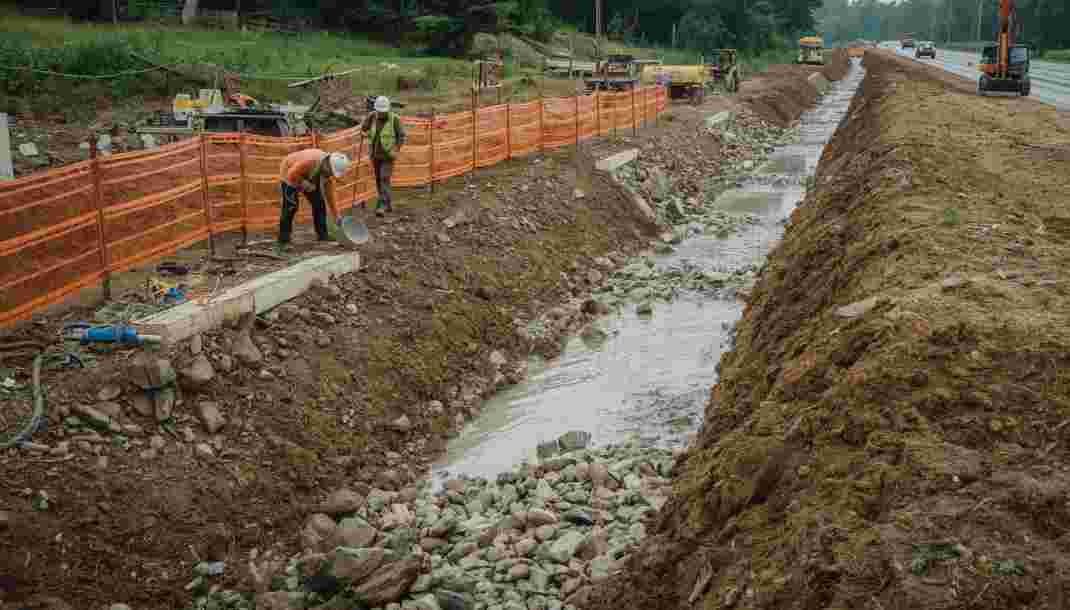
Civil development and infrastructure growth are critical components of economic progress. However, the process of clearing vegetation, grading slopes, and exposing raw soil introduces significant environmental risks. When rain falls on an unprotected construction site, loose dirt quickly transforms into muddy runoff.
Without proper containment measures, this sediment flows into local storm drains, creeks, rivers, and lakes. Sediment pollution destroys aquatic habitats, clogs fish gills, and clouds natural water sources, severely disrupting the local ecological balance. To mitigate these hazards, implementing proactive sediment containment strategies is a vital responsibility for every project manager.
1. Stabilizing Soil with Silt Fences
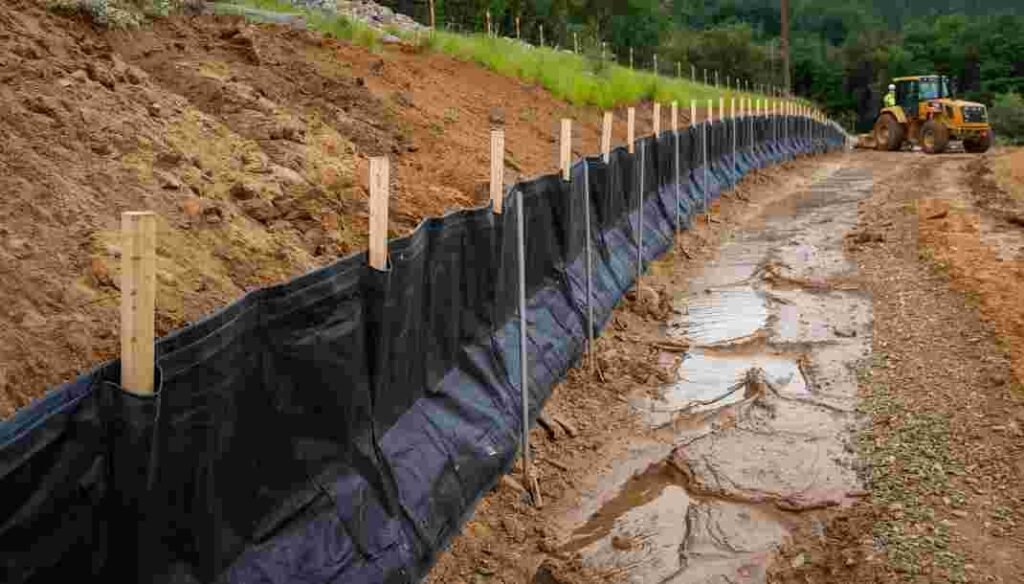
One of the most widely recognized and frequently utilized methods for capturing loose soil particles before they leave a job site is the installation of temporary silt fences.
Infrastructure growth plays a vital role in strengthening communities, supporting development, and creating long-term economic opportunities.
Proper Placement along Slopes
A silt fence consists of a porous geotextile fabric stretched across a series of wooden or steel support posts. These barriers are placed at the base of disturbed slopes where sheet-flow runoff occurs. As muddy water encounters the fabric, the forward momentum slows down, causing the suspended soil particles to drop out of the water and settle along the fence line, while the liquid filters through slowly.
Trenching for Maximum Structural Security
For a silt fence to function effectively, it must be installed correctly. Simply pinning the fabric to the ground is insufficient, as water will quickly wash underneath the barrier, causing it to collapse. Workers must excavate a trench at least six inches deep along the fence line, bury the bottom edge of the fabric into the ground, and backfill it with tightly packed soil.
Regular inspections after rain work as one of the most important essential home maintenance tasks on a construction site, helping crews spot loose fabric, sediment buildup, or drainage problems before they cause serious damage.
2. Deploying Erosion Control Blankets
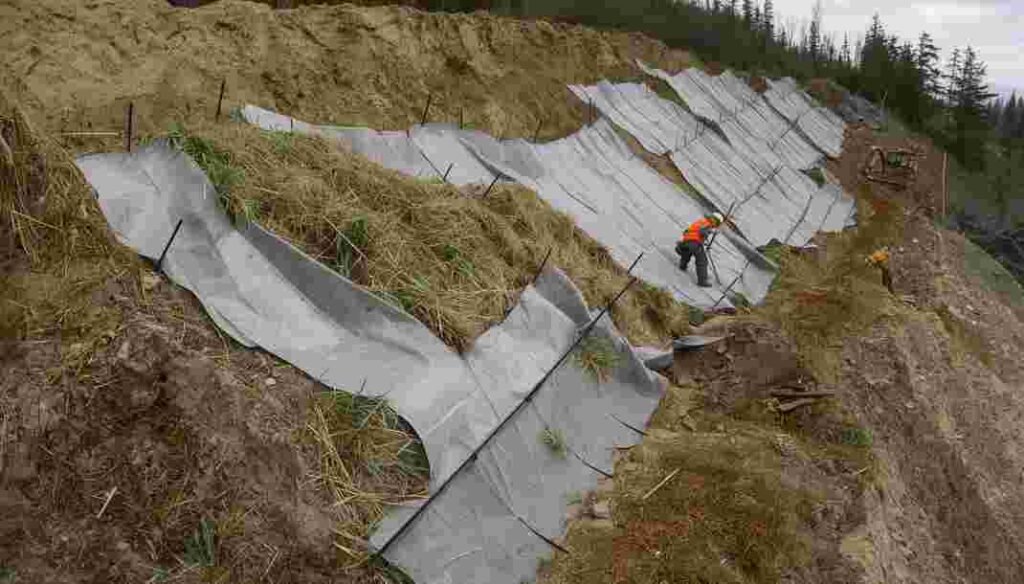
On steep slopes or embankments where wind and water forces are highly concentrated, traditional barriers are rarely enough to keep soil anchored in place. In these vulnerable areas, protective blankets offer an excellent shield.
Immediate Surface Protection
Erosion control blankets are large mats woven from organic materials such as coconut fiber, straw, or wood excelsior. When unrolled and securely stapled over exposed soil, they act as an immediate physical shield against the impact of falling raindrops. By absorbing the kinetic energy of the rain, these blankets prevent the initial detachment of soil particles.
Fostering Root Development
Beyond providing immediate surface defense, these blankets retain vital soil moisture and regulate temperatures, creating an ideal environment for new grass seeds to germinate. As the underlying vegetation takes root, its root systems naturally bind the soil together, establishing permanent stability. Over time, the organic components of the blankets biodegrade harmlessly into the earth, leaving behind a fully stabilized, naturally reinforced slope.
3. Implementing Rock Check Dams
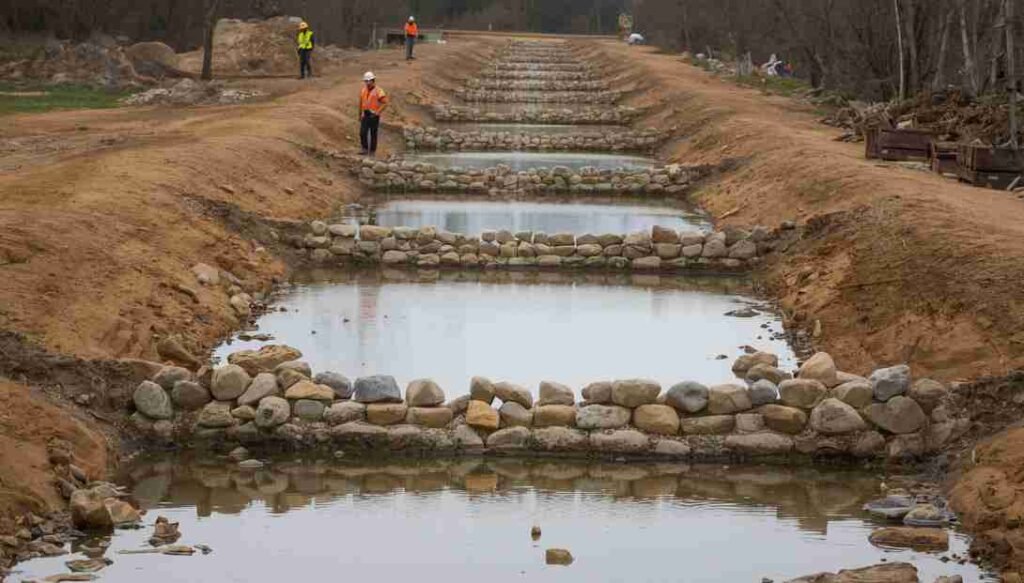
When water funnels into drainage ditches, swales, or open channels, it gathers speed rapidly. Fast-moving water possesses immense erosive power, carving deep gullies into the earth and carrying away massive amounts of sediment.
Slowing Down High-Velocity Flows
A check dam is a small, temporary barrier constructed across a channel or swale using large, washed rocks or gravel bags. These structures are designed to pond water temporarily behind them, drastically reducing the velocity of the flow. By forcing the water to slow down, the heavier sediment drops to the bottom of the channel before the water passes over the crest of the rocks.
Strategic Distance Layouts
Check dams must be spaced progressively along the length of the channel. The crest of the downstream dam should be perfectly level with the base of the upstream dam. This strategic spacing ensures that water remains at a manageable speed along the entire route, preventing the water from carving away the edges or banks of the drainage ditch.
4. Constructing Stabilized Entrances and Washout Areas
A significant amount of sediment leaves construction zones not through water runoff, but rather by clinging directly to the tires and undercarriages of heavy trucks, tractors, and excavators.
Stone Construction Pads
To combat track-out pollution, sites must feature a stabilized entrance pad constructed from large, angular crushed stones. As vehicles drive over this rough stone surface, the tires flex, shaking loose thick mud and trapping it within the rock crevices before the trucks enter public asphalt roads.
A significant amount of sediment leaves construction zones not through water runoff, but by clinging to the tires and undercarriages of heavy trucks, tractors, and excavators. Keeping machinery organized in a secure area also helps reduce site mess, and proper construction equipment storage supports cleaner access points and better sediment control.
Mitigating Severe Runoff Challenges
Managing these specific environmental vulnerabilities requires specialized knowledge tailored to local geography. For instance, teams implementing comprehensive erosion control in Utah must account for arid conditions, sudden mountain downpours, and fragile desert soils that wash away with extreme ease. Incorporating regional environmental protocols ensures that sediment tracking and windborne dust stay securely contained within property lines.
5. Utilizing Concrete Washout Containment Systems
Liquid waste generated from washing out concrete mixers, mortar tools, and plaster equipment is highly toxic to aquatic life due to its extremely high pH levels and heavy chemical composition.
Total Liquid Isolation
Allowing wash water to flow freely into the ground allows toxic chemicals to leach directly into nearby streams. Construction sites must designate an airtight, leak-proof washout container or a lined pit to collect this slurry.
Evaporation and Proper Material Recycling
Once the container fills up, the liquids evaporate naturally, or specialized recycling trucks remove the slurry for off-site treatment. The remaining hardened concrete can then be broken apart and recycled as aggregate for future sub-base road projects, ensuring zero chemical runoff reaches local water resources.
By integrating these five vital protection methods into your daily site management routine, you can confidently run a highly productive project while fulfilling your ethical duty to protect the surrounding watershed.